Showing posts with label Frankenstein. Show all posts

Wednesday, April 1, 2026

'Monster Mayhem Collection' Blu-ray

Even in an age when bad movies like Hocus Pocus and Clue achieve classic status there have to be limits. Yet here we are with a special edition set of movies even fans of The Monster Squad will recognize as crappy. According to the ballyhoo for The Monster Mayhem Collection, this two-disc set features four films scanned from 35mm archival prints, maintaining their original aspect ratios, and supplemented with feature commentaries and several featurettes. A presentation fit for Citizen Kane

So which classics of Hollywood's golden age were lavished with such cinephile splendor. Well...

Monday, July 14, 2025

Review: 'The Godfathers of Horror Films'

I've read biographies of Boris Karloff and Peter Cushing. I've read a book about the professional and personal relationship between Peter Cushing and Christopher Lee. But I've never read a book like Jennifer Selway's The Godfathers of Horror Films

Selway attempts to do a lot in just two-hundred pages. At its most basic, The Godfathers of Horror Films is a triple-duty biography of Karloff, Cushing, and Lee. While the three stars have several significant things in common—they're all British, they all became stars by making Frankenstein movies after many years of toiling away as bit players, they all had major and prolific careers as horror stars thereafter, they were all the faces of studios intrinsically associated with horror, they all fought in world wars—their careers overlapped infrequently enough to make weaving their stories together a challenge. 

Tuesday, July 8, 2025

Review: 'Frankenstein Lives: The Legacy of the World's Most Famous Monster'

Dracula may be sexier, but Frankenstein is the king of the monsters. His power, pathos, versatility, metaphorical possibilities, and iconic looks are all larger than manmade life. The story of his literary creation is much more legendary than that of Dracula's, and the subsequent tales he has inspired more profound. So it's only natural that this unnatural character has been the topic of many books.

Wednesday, July 5, 2023

Review: 'Dead Funny: The Humor of American Horror'

Serious horror fans may argue that humor undercuts terror, but the two emotions come from similar places. A laugh and a shriek are both spontaneous reactions often brought on by a surprise and/or a stimulus often (but not always) specifically designed to elicit such a reaction. Horror and humor can enhance each other when dealt out piggyback style. Think of how the hideous Deadites generate wails of horror when they fly up from the fruit cellar in Evil Dead II but then immediately cause wails of laughter when they start behaving more like Moe and Curly. Think of how a humorously foul-mouthed conversation amongst starship crew members suddenly turns terrifying when the titular Alien bursts through one of their chests. 

Friday, November 18, 2022

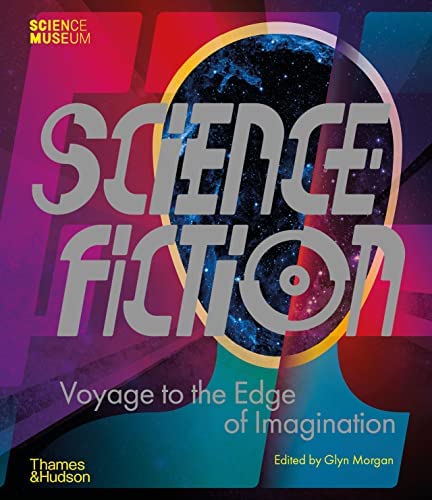
Review: 'Science Fiction: Voyage to the Edge of Imagination'

From this past October 4 through May the 4th of 2023, The Science Museum in London is running an exhibition called Science Fiction: Voyage to the Edge of Imagination. Those who might cry "blasphemy!" at the idea of a serious science museum paying tribute to a world of made-up monoliths and wookiees hasn't been paying very close attention to sci-fi for the past two-hundred years. Ever since Mary Shelley published Frankenstein, the genre has been raising serious questions about the role science plays in our lives, using fantastical scenarios as a means to discuss touchy topics, and inspiring the next generation of astrophysicists, paleontologists, and biologists. 

Sunday, October 16, 2022

Review: 'The Team-Up Companion'

In 1954, DC halved the page count of its World's Finest Comics and forced Superman and Batman into the same book as if they were a couple of recently divorced bozos sharing a flat. They mostly kept to their own sides of the room, but a new format was inadvertently born: the team-up. This was distinct from crossovers or guest appearances because both heroes were on equal footing in a shared title with both their logos on display. Pretty soon, team ups of everyone from Green Arrow and Martian Manhunter to Supergirl and Wonder Woman to Aqualad and Robin to Richie Rich and Casper to Spider-Man and Dracula (!) began proliferating funny books. 

Tuesday, August 9, 2022

Review: 'The Ultimate Book of Movie Monsters'

One of the great draws of scary movies--which often aren't really that scary at all--is the chance to see some rad monster designs. That's the main draw of Christopher Carton's new book, The Ultimate Book of Movie Monsters, too. 

Thursday, May 12, 2022

Review: 'It's Alive'

A film as timeless and iconic as James Whale's Frankenstein is going to stir its share of myths and mysteries. Why exactly did Bela Lugosi not end up playing the Monster? Why did Universal's studio chief, Carl Laemmle, allow son Junior to make another one of those gruesome horrors dad found so detestable? How did the virtually unknown character actor Boris Karloff land such a career-making role? 

I won't go into the multitudinous theoretical answers to all these questions because Julian David Stone already did it for me. His new book, It's Alive, is a work of historical fiction that provides confident answers to the big questions floating around Frankenstein. Since his book includes no foreword or afterword, just the story, I'm not sure what Stone's methodology was or what sources he consulted, but ultimately when dealing with historical fiction, it's best to treat the material more as fiction than history. Otherwise, you may come away from watching Ed Wood believing all the incredibly entertaining bunk Tim Burton slapped up on the screen.

Thursday, September 23, 2021

Review: 'Universal Studios Monsters: A Legacy of Horror' Updated Edition

This year marks 90 years since Universal Studios became synonymous with horror by plopping both Dracula and Frankenstein into theaters. To commemorate that momentous event (and the 80th anniversary of The Wolf Man), Michael Mallory has updated his 2009 book Universal Studios Monsters: A Legacy of Horror. Apparently, no changes have been made to the book's main text, which features synopses and a bit of background information on Universal's monster movies, including less celebrated pictures such as Night Monster and Monster on the Campus, and profiles of significant players from Karloff, Lugosi, and Chaneys Sr. and Jr. to director James Whale, makeup magician Jack P. Pierce, and perpetually shrieking character comedienne Una O'Connor. Short bios on Gloria Stuart and Elena Verdugo imply that these actresses, who died after the book's first publication, are still with us. 

The main changes are in a new introduction from Jason Blum of new horror manufacturer Blumhouse Productions and a 15-page coda mostly focused on Blumhouse/Universal's 2020 update of The Invisible Man. Oddly, there's nothing about Universal's other revivals of classic monsters both successful (1999's The Mummy and its sequels) and considerably less so (2004's Van Helsing, 2010's The Wolf Man, 2014's Dracula Untold). 

Still, it's worthwhile to have Universal Studios Monsters back in print. Serious fans may not learn much from Mallory's text, but the copious B&W and color portraits, stills, posters, and behind-the-scenes snaps of the most recognizable faces since Santa Claus are spectacular. With the additional material, there's also some neat fan art to complete a visually arresting package.

Monday, August 9, 2021

Review: 'Hosted Horror on Television: The Films and Faces of Shock Theater, Creature Features, and Chiller Theater'

In 1957, Screen Gems released a package of 52 horror films produced between 1931 and 1947 to local television stations across the U.S. The "Shock Theater" package arrived with a suggestion that stations might want to employ a host to introduce and comment on the pictures. Every Monster Kid knows what happened next. Vampira popped up on KABC-TV in LA. Roland (soon to be Zacherley) did the same on WCAU in Philadelphia. Chicago's Marvin, San Francisco's Terrence, Indianapolis' Sammy Terry, New Orleans' Morgus, Nashville's Dr. Lucifer, Cleveland's Ghoulardi, Pittsburgh's Chilly Billy, and many others who adopted bizarre, high-camp personas to introduce Lugosi and Karloff pictures followed. Droves of kids too young to see The Invisible Man first time around finally got a chance to revel in James Whale's outre humor. Forry Ackerman fed that love with Famous Monsters of Filmland Magazine, as did The Munsters and Aurora's line of macabre model kits.

The horror host phenomenon was so widespread and influential that it's just waiting for someone to write a terrific book about it. Bruce Markusen's Hosted Horror on Television is not the book because it doesn't really attempt to be. It's basically a critical survey of some of the films that appeared in "Shock Theater" and the later packages "Son of Shock Theater", "Creature Features", and "Chiller Theater". Markusen's specific discussions of the packages and the horrors who hosted them come in fitful bursts that spark the book to life whenever they interrupt his fairly insightful yet wordy critiques. 

Tuesday, August 4, 2020

Review: 'Fright Favorites: 31 Movies to Haunt Your Halloween and Beyond'

It was hard enough boiling a century of horror cinema down to 200 spook shows. Imagine having to whittle it down to 31.

I understand the significance of the number—just enough to watch a single picture on each night of October—but its skimpiness skirts inconsequence. Normally, I wouldn’t even bother with a book like Fright Favorites: 31 Movies to Haunt Your Halloween and Beyond. I made an exception because its author is the David Bordwell of horror: David J. Skal, the writer of such essential tomes as The Monster Show: A Cultural History of Horror, Hollywood Gothic: The Tangled Web of Dracula from Novel to Stage to Screen, and Death Makes a Holiday: A Cultural History of Halloween.

Friday, October 26, 2018

Psychobabble’s 31 Favorite Universal Horrors: #6


Halloween season simply isn’t Halloween season without a regular dose of golden age Universal horror (1923-1963). Every day this October, I’ll be giving you a steady IV drip of it by counting down Psychobabble’s 31 Favorite Universal Horrors!

#6. Frankenstein (1931- dir. James Whale)

The definitive Universal monster movie. James Whale was a great wit, but he plays Frankenstein very seriously (in fact, the only comic relief character, Baron Frankenstein, is a complete dim wit and not particularly funny). You won’t miss the cheekiness of Bride, Invisible Man, or The Old Dark House because you will be completely transfixed by Boris Karloff’s devastating portrayal of the Monster. He can be terrifying, as he is in his disturbing jump-cut introduction, but he is mostly deeply moving and sympathetic. It is a beautiful performance heavily indebted to silent film but without a lick of the over-emoting/over-gesticulating that marked much pre-sound acting. Karloff is completely, modernly naturalistic whether tragically trying to connect with a little girl or reaching for rays of sunlight as if they’re tangible love. Colin Clive is also great as frantic, obsessed Dr. F., and Dwight Frye is at his nastiest as the doctor’s sadistic assistant Fritz. Whale’s Gothic style is impeccable, and the inventive editing and staging make this a monster movie as towering, solid, and timeless as the creature himself.

Wednesday, October 17, 2018

Psychobabble’s 31 Favorite Universal Horrors: #15


Halloween season simply isn’t Halloween season without a regular dose of classic Universal horror (1923-1963). Every day this October, I’ll be giving you a steady IV drip of it by counting down Psychobabble’s 31 Favorite Universal Horrors!

#15. House of Frankenstein (1944- dir. Erle C. Kenton)

I don’t care if they’re schlocky—Universal’s monster rallies scratch a sweet spot that movies with just one creature never could. The Mummy? That guy’s totally lonesome. Frankenstein Meets the Wolf Man? Closer, but not quite there yet, guys. Erle C. Kenton’s House movies? Ahh, that’s the sweet relief I’ve been craving. One of the best and most monster-crammed rallies is House of Frankenstein. “FRANKENSTEIN'S MONSTER! WOLF MAN! DRACULA! HUNCHBACK! MAD DOCTOR!... All the Screen's Titans of Terror - Together in the Greatest of All SCREEN SENSATIONS!” went the ballyhoo. The cast is killer with Chaney Jr. as the Wolf Man, Glenn Strange as the monster, John Carradine making his elegant debut as the count, and Karloff taking one last bow in a Frankenstein picture a the mad scientist. The one major flaw is the film’s split structure that prevents all of the monsters from ever sharing screen time together.  If you see any other flaws in this big heap of wonderful, I’m not sure if we can be friends anymore.

Tuesday, October 16, 2018

Psychobabble’s 31 Favorite Universal Horrors: #16


Halloween season simply isn’t Halloween season without a regular dose of classic Universal horror (1923-1963). Every day this October, I’ll be giving you a steady IV drip of it by counting down Psychobabble’s 31 Favorite Universal Horrors!

#16. Son of Frankenstein (1939- dir. Roland V. Lee)

Universal’s second Frankenstein sequel, and its final Frankenfilm with Karloff as the Monster, is too long by 30 minutes and that little kid is a menace, but boy oh boy, is Bela Lugosi ever a blast to watch as Ygor! Tired of the franchise and an increasingly limited role to play, Karloff seems to cede the film to Lugosi, who is only too happy to steal the show as the diabolical survivor of a botched hanging. Ygor uses the Monster as a pliable tool of revenge in a sheepskin vest. Lionel Atwill is also terrific as the police inspector with a chip on his shoulder and splinters in his arm.

Tuesday, October 2, 2018

Review: 'Frankenstein Alive, Alive!: The Complete Collection'


In 2012, writer Steve Niles (30 Days of Night; Batman: Gotham County Line) and artist Bernie Wrightson (Swamp Thing) began publishing a four-issue sequel to Wrightson’s 1983 comic adaptation of Mary Shelley’s Frankenstein. While the new story was somewhat slight, and gave the resurrected monster little to do besides ponder his newfound humanity and commit one decisive, redemptive act, Wrightson’s artwork is absolutely extraordinary. The level of detail is remarkable—you could spend hours exploring a mad doctor’s roomful of freakish curios—while the black and white work recalled both E.C. Comics’ and Universal Horror’s best. The monster, himself, was an original creation without Jack Pierce’s trademark flattop and “bolts,” representing the more human-like creature Shelley described while still delivering something truly monstrous looking.

That is where the monstrousness of Niles’s creature ends. He is thoroughly benign in the Frankenstein Alive, Alive! series, leaving the most monstrous deeds to a Dr. Ingles (an clear homage to “Ghastly” Graham Ingles, E.C.’s greatest renderer of oozing grue and a major influence on Wrightson). Dr. Ingles’s warped attempts to restore life to his dying wife provide the true horror of Frankenstein Alive, Alive! and infuse the plot with its meatiest moments. However, the real star of this sideshow—as Niles acknowledges in his introduction to a IDW’s new hardcover collection of all four issues—is Wrightson.

Sadly, the artist died of brain cancer before he was able to complete the fourth and final installment of Frankenstein Alive, Alive!, so at his personal request, Kelley Jones (Swamp Thing; Batman) was brought on to finish the final issue with illustrations based on Wrightson’s sketches. As we can see from those sketches included as valuable bonus pages in Frankenstein Alive, Alive!: The Complete Collection, Wrightson’s fine detailing was still in full force for the final chapter, though Jones curiously mutes those details despite the relative faithfulness of his reproductions of Wrightson’s sketches. Some artists truly are irreplaceable.

Psychobabble’s 31 Favorite Universal Horrors: #30


Halloween season simply isn’t Halloween season without a regular dose of classic Universal horror (1923-1963). Every day this October, I’ll be giving you a steady IV drip of it by counting down Psychobabble’s 31 Favorite Universal Horrors!

#30. The Ghost of Frankenstein (1942- dir. Erle C. Kenton)

By far the weakest of the Frankenstein movies, The Ghost of Frankenstein still has a bit going for it, the most notable thing being more time with Bela Lugosi in his best role: Ygor. The rest of the cast is strong too with appearances by such monster mainstays as Lon Chaney, Jr. (admittedly, not a great monster), Lionel Atwill, Evelyn Ankers, and Ralph Bellamy. We also see the first hob-nailed boot step in the Monster’s journey toward morphing into cuddly Herman Munster as he helps some kid get her ball down from a roof. Sure, he kills a couple of goofballs while doing it, but no one ever said redemption happens overnight.

Thursday, January 11, 2018

Review: 'Bela Lugosi and Boris Karloff: The Expanded Story of a Haunting Collaboration'


With the release of Ed Wood in 1994, “Karloff! That Limey cocksucker!” quite nearly replaced “I never drink…wine” and “The children of the night…what music they make” as the go-to phrase when doing a bad Bela Lugosi impression. Tim Burton’s movie hipped the larger film-going public to some of the real-life seething that went on during the filming of such Lugosi/Boris Karloff collaborations as The Black Cat and The Body Snatcher. However, Burton’s superb yet cartoonish film provided little of the complexity behind this classic Hollywood “rivalry.” For that, one would have to take a trip to the local Waldenbooks and pick up a copy of Gregory Mank’s Bela Lugosi and Boris Karloff: The Story of a Haunting Collaboration.

Originally published in 1990, the over 350-page book attempted a more nuanced view of a relationship that couldn’t simply be boiled down to a venerated horror star and a jealous, drug-addled also-ran. Swelling with an additional 250-or-so pages in 2009, the now Expanded Story of a Haunting Collaboration went into even greater depth with additional information and interviews. By Mank’s analysis, Lugosi and Karloff may have enjoyed a rather friendly working relationship while making Son of Frankenstein, and the alleged hatred Lugosi felt for Karloff may have really been directed at a Hollywood system that constantly ground the vampire under its merciless stake.

Karloff is not completely without blame in this mostly one-sided clash of titans. While he never had an explicitly nasty thing to say about Lugosi, his patronizing insistence on referring to his co-star as “poor Bela” in private and public could not have endeared himself to the actor who could be quite proud despite demeaning himself in Poverty Row and Ed Wood pictures.

Mank’s valiant attempt to uncover how Lugosi and Karloff really felt about each other was doomed to go without a definitive answer, but that barely matters when the rest of the story is so fascinating and well told. Mank goes deep into the movies they made together with nearly scene-by-scene analyses without neglecting the most important pictures they made without the other. So we get very satisfying histories of Dracula, Frankenstein, The Mummy, and other key films, as well as quite a bit of information about other key players in those films such as James Whale and Colin Clive.

Last updated nearly a decade ago, Bela Lugosi and Boris Karloff: The Expanded Story of a Haunting Collaboration is now enjoying a new printing though not another updating. That’s generally fine since there probably haven’t been many new revelations about the Karloff/Lugosi rivalry in recent years since so many of their other collaborators have died. Mank’s incessant leching over Lugosi and Karloff’s female co-stars is more than a little dated and brings nothing but discomfort to the storytelling, but if you can get past that, you will find that Bela Lugosi and Boris Karloff: The Expanded Story of a Haunting Collaboration remains one of the great studies of classic horror films.

Tuesday, October 31, 2017

Psychobabble’s 100 Favorite Monsters!


Welcome, foolish mortals, to Psychobabble’s House of 100 Monsters. Creak up the steps and over the threshold. Within this vile abode you will encounter not 98, not 99, but one hundred of the most terrifying, horrifying, unpleasantifying creatures who have ever haunted the page, the screen, and the breakfast table. They are my personal favorite freaks, ranked from terriblest to really terriblest. No Halloween is complete without a visit to a spook house, and my house of horrors is as spooky as it gets. So I formally invite you to freak out to Psychobabble’s 100 Favorite Monsters. Step right this way…

100. Tar Man

First, allow me to guide you down into the basement where a certain deceased individual has recently been resurrected by a certain military-grade toxic gas. Don’t ask me who he was in life, but in death this standout star of Return of the Living Dead is like an E.C. Comics zombie in the oozing flesh and he wants one thing only... brains!

99. Black Frost

Sidestep the Tar Man and take a break by our deep freeze. Oops. Bad idea, because inside is a terrifying thingy that blasts incapacitating frosty air from its jockstrap. This is how Black Frost brought down The Mighty Boosh, and it traumatized many viewers of their surreal British comedy by baring its unsettlingly white teeth before breaking into a hideous dance of death. He’s one icy bastard.

98. Clayface

Wait a minute… that chap wasn’t Black Frost at all! His face has morphed back into its natural state—that of one Matt Hagen, better known as Batman’s hulking, shape-shifting nemesis Clayface, one of the nastiest and most genuinely monstrous monsters to ever menace Gotham City!

97. Wampa

Back in the deep freeze is another terrible creature, a towering snow beast with white, shaggy fur and clawed paws the size of trashcan lids. Is it the Yeti? Nah. They wouldn’t know what the hell a Yeti is up on the distant planet of Hoth. That’s where the Wampa whomps Luke Skywalker’s face off in the shocking attack that kicks The Empire Strikes Back into gear.

96. Pumpkinhead

Friday, October 20, 2017

Review: 'The Old Dark House' Blu-ray


Frankenstein is an undisputed masterpiece of Gothic horror with one of the great on screen performances from Boris Karloff as what is probably the most iconic depiction of a classic monster ever seared into celluloid. James Whale never made a more famous film—and not many other filmmakers have either—yet Frankenstein still doesn’t feel like his definitive work because it is almost completely lacking in a key Whale element: droll humor. He did not start stirring this essential ingredient into his horror movies until his next one: a nutso adaptation of J.B. Priestley’s novel Benighted called The Old Dark House.

The Old Dark House is a classic old dark house set up: on a stormy night, a rag-tag group of strangers seek shelter at a creepy manse full of ooky kooky weirdos. Plot-wise, there is very little else to The Old Dark House, but Benn W. Levy’s script gives a remarkable cast featuring Charles Laughton, Gloria Stuart, Melvyn Douglas, Eva Moore, and the divine Ernest Thesiger oodles of delicious things to say. As a leering butler without the ability to speak, Karloff does not get to roll Levy’s words over his tongue as the rest of the gang does, but he still makes his presence felt in an unhinged and unsettling performance. And the cool thing about The Old Dark House that distinguishes it from Whale’s other horror-comedies—The Invisible Man, and his real defining piece, Bride of Frankenstein—is that it still hold up as true-blue horror, blending in some genuinely chilling moments among the clowning.

Universal lost the right to release The Old Dark House after the Priestley estate resold the story to Columbia so it could remake Benighted in 1963 (and though I love director William Castle to death, it’s a lousy film), but this may actually be a good thing since Universal now only seems interested in its golden age horrors featuring the Big-Six monsters. If Universal still had dibs on The Old Dark House, we may never have gotten a Blu-ray release, which we now have thanks to the Cohen Film Collection. This 4K restoration looks miraculous compared to Kino’s 1999 DVD. The picture is clean and boasts beautiful contrast. The grain can get a bit intense, but these moments are few and hardly disrupt what is overall a fabulously clean presentation for a film of this age. Even the opening reel, which is only a dupe since the original was too decayed to use, looks pretty great. However, the soundtrack is somewhat tinny and noisy in patches, and the noise gets particularly hairy in the penultimate reel.

Most of the extras—feature commentaries with Gloria Stuart and James Curtis (who wrote the essential James Whale: A New World of Gods and Monsters) and an interview with Curtis Harrington, who knew Whale and hunted down the original negative of the film—were ported over from the Kino DVD (only an image gallery was lost in translation). Cohen only adds a booklet interview with Harrington and a 15-minute video interview with Boris’s daughter Sara Karloff, who discusses her dad’s career, difficulty in the makeup chair, and unique voice and body language. However, a lack of abundant new bonuses are of little consequence considering how much one of the great old films now looks like a great new film.
All written content of Psychobabble200.blogspot.com is the property of Mike Segretto and may not be reprinted or reposted without permission.