Showing posts with label Phil Spector. Show all posts

Sunday, June 1, 2025

Review: 'Buzz Me In: Inside the Record Plant Studios'

What do Electric Ladyland, There's a Riot Goin' On, Black Sabbath Vol. 4, Innervisions, Rumours, Cheap Trick '77, Parallel Lines, a spiffy 12-track machine, a room-size Moog, a suite of sex-fetish rooms, and 162 tons of cocaine have in common? They're all among the ingredients that made the Record Plant THE Record Plant

Founded by engineer Gary Kellgren, the Record Plant was the first successful studio by and for hippies. He decked the place out with high-tech equipment (a board capable of recording twelve tracks...twelve!) and, inspired by the perpetual skinny-dipping party at Peter Tork's house, an atmosphere of sexual and chemical malaise. It's where rock and rollers could escape the sterility of their grampa's recording studios to rock out, experiment, snort, and screw as much as their bodies and labels' budgets could bear.

Monday, June 10, 2024

Review: Paul McCartney & Wings' 'One Hand Clapping'

After releasing Band on the Run and finally getting a gold star from venomous critics, including the most venomous critic of all (Lennon), Paul McCartney was hot to keep riding that wave of good will. So he rushed into the studio with Wings to follow up with a live-in-the-studio session of covers and songs he'd already recorded and released with his current band, as a solo artist, and with his old band featuring that most venomous critic of all (Lennon).

Friday, August 11, 2023

Review: 'But Will You Love Me Tomorrow?: An Oral History of the '60s Girl Groups'

Between the original rock and roll era of Chuck, Buddy, and Bo and the British Invasion, the most happening thing happening in rock and roll was the girl group sound. Fresh, sexy, fun, and often emotionally raw, hits by The Supremes, The Marvelettes, The Ronettes, Darlene Love, The Angels, The Vandellas, The Crystals, The Shirelles, and the rest made radio worth listening to. Once The Beatles arrived in the Colonies, only the Motown groups really hung on (and let's not forget that The Supremes remained America's most unstoppable hit machine of the sixties), but the music they all made is timeless.

Wednesday, January 12, 2022

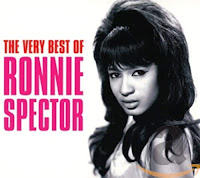
Farewell, Ronnie Spector

Rock and roll was always aimed at a young audience, and from the genre's very beginning, rock singers' were voicing the concerns and feelings of their teenaged audience. Artists like Chuck Berry and Buddy Holly may have been experts at writing lyrics that reflected the antiestablishment angst or romantic yearnings of their young audience, but they didn't really sound like kids themselves. Neither did Elvis or Little Richard or Fats Domino or Darlene Love. Ronnie Spector, however, did. 

Just eighteen when she started recording with The Ronettes, Veronica Bennett sounded like a kid because she basically still was one, but even when she started having hits with the glorious "Be My Baby" at age twenty , she always retained that youthful timbre. However, she always enriched her high-pitch with a real sense of experience and completely unfiltered emotion. 

When she married  Phil Spector, the producer of her most unforgettable hits, her career slammed to a halt as he basically kept her a prisoner in her own home. Fortunately, she had the guts to escape her abusive spouse, tell her story, and continue singing in that magical voice pitched right on the borderline of adolescence and adulthood. Whether Ronnie Spector is singing "Be My Baby" or "I Saw Mommy Kissing Santa Claus", her voice always tears my heart out in the best way. Sadly, she died today at the age of 78 after suffering from cancer.

Monday, October 25, 2021

Review: The Beatles' 'Let It Be' Special Edition (Super Deluxe Vinyl Box Set)

As most Beatles fans know, the album ultimately released as Let It Be was not supposed to be The Beatles’ last. A peculiar set of circumstances caused the recordings, mostly made in January of 1969, to sit on the shelf for nearly a year. Consciously aware of how his band was supposed to break new ground with each new project, Paul McCartney envisioned their latest to be a multi-media event. Filmmaker Michael-Lindsay Hogg would document the sessions for the big screen. There would be a high-profile concert—The Beatles’ first in nearly three years—in an exotic location. There would also be an album, of course, but the discomfort of recording in a strange location (Twickenham Film Studios), at weird hours, and under the constant gaze of Lindsay-Hogg’s crew, all while suffering their own personal and business issues, made a mess of the sessions. Trying to hold it together, Paul got bossy. George Harrison quit. John Lennon cracked jokes. 

Monday, March 8, 2021

Review: 'Hollywood Eden'

LA was America’s rock hub in the mid-sixties. The Beach Boys, The Turtles, The Doors, Buffalo Springfield, The Monkees, The Mamas and the Papas, The Byrds, Paul Revere and the Raiders, Harry Nilsson, Frank Zappa, Nancy Sinatra, and Love are but a scoop of the artists who buzzed around the Sunset Strip, scored smash hits, and/or changed the face of rock and roll in America and beyond.

Tuesday, March 12, 2019

Farewell, Hal Blaine


A session musician becoming a household name is almost unheard of, but the name "Hal Blaine" is probably as close as it comes. This is the guy who thumped out what may be the most iconic beat of all: the two bass hits/one snare snap that launched "Be My Baby". That startling moment is just one of many, many startling ones. 

The list of songs Blaine helped bring to life is absolutely staggering. He was responsible for scattering majestic fills all over Simon & Garfunkel's "America". He brought orchestral grandeur to Pet Sounds and SMiLE. He funked up The Monkees' "Mary Mary". He pummeled out those rolls that make Neal Hefti's "Batman Theme" go POW! That's him on Elvis's "Bossa Nova Baby", The Association's "Along Comes Mary", The Beach Boys' "Good Vibrations", Paul Revere and the Raiders' "Hungry", Love's "Andmoreagain", The Mamas and Papas' "Go Where You Wanna Go", The Crystals "Da Doo Ron Ron", The Byrds' "Mr. Tambourine Man", The Vogue's "You're the One"... the theme from Three's Company! Phil Spector and Brian Wilson would have been nowhere without Hal Blaine. By his own estimation, he played on some 6,000 tracks.

Blaine was also a big personality, as evidenced in the numerous documentaries to which he contributed his memories, such as The Wrecking Crew! and Beautiful Dreamer: Brian Wilson and the Story of SMiLE. Sadly, the world just lost that beat and that personality because Hal Blaine died at the age of 90 yesterday. You can't say the guy didn't live a full life though.

Wednesday, April 27, 2016

Review: 'Easy Rider' Blu-ray


It’s well known that the gritty, independently minded cinema that defined the seventies officially began in the final year of the previous decade with Dennis Hopper’s Easy Rider. It was the perfect bridge between the goofy acid and motorcycle movies of Roger Corman’s sixties independents and seventies landmarks like Five Easy Pieces and The French Connection, with their sexist antiheroes and unflinching cynicism. While Easy Rider has a hazy reputation for celebrating the sixties’ hippies, drug culture, and Rock & Roll, it’s really a eulogy of that era. 

Hopper is Billy and co-screenwriter Peter Fonda is Wyatt, outlaws in cowboy hats and leather jackets riding across the wide-open west on their iron horses. Just like the cowboys of frontier times, they are also doomed to extinction. They visit a hippie commune lapsed into depression and destitution. Instead of changing hearts and minds with their in-your-face freedom, they meet a succession of unmovable, hostile, long-hair-hating rednecks. They end up weeping on acid. They end up in jail. There they meet a short-haired, tie-wearing lawyer (Jack Nicholson in the performance that rightfully made him a star) who’d never even smoked pot but seems to understand and embrace the joys of freedom more than they ever could. Wyatt sums up the film’s true message when Billy crows about a drug deal that will make them “rich” and able to “retire in Florida” (hardly hippie ideals) with a deflated “We blew it.” Things get worse from there.

Easy Rider is a defeated survey of sixties Utopianism. It packs a particular punch because it’s made by two guys who’d believed in that ideology. The general failure of that ideology largely led to the cynicism that plagued seventies cinema. Yet there is joy in its songs (The Byrds, The Band, Steppenwolf, Jimi Hendrix), László Kovács’s gorgeous panoramic cinematography, and Jack Nicholson’s exuberant performance. The set piece in which the guys sell drugs to Phil Spector as heavy airplane traffic roars twenty feet above their heads is an ingenious piece of ultra-noisy “silent” filmmaking. The haunting graveyard acid trip is cinema’s first— and perhaps only— psychedelic sequence that does not feel like a comic strip parody. Don Camber’s flashing editing creates tension in the most serene scenes.

In 2010, The Criterion Collection gave Easy Rider a major hi-def renovation as part of the America Lost and Found: The BBS Story blu-ray/DVD box set. Last year, Criterion began the process of breaking up that collection with a stand-alone release of Five Easy Pieces, and it continues this year by putting out Easy Rider on its own (Head, meanwhile, will be part of Rhino’s endlessly upcoming Monkees Complete Series box set). This release is identical to the one in The BBS Story with the same hi-def restoration, extras (two commentaries; two documentaries from the nineties; a revealing interview with BBS’ Steve Blauner, who gives some fascinating information on his days working with The Monkees;  two minutes of B&W footage from Cannes 1969 featuring Hopper and Fonda), and even booklet essay. Fortunately, all of that stuff was great in The BBS Story, so if you wanted Easy Rider but didn’t want to spring for the whole box, this new release is ideal.

Monday, June 15, 2015

Review: 'The Wrecking Crew' DVD


No Rock & Roll education is complete without getting familiar with the rotating ensemble of session musicians now known as the Wrecking Crew. Guitarists Tommy Tedesco and Glen Campbell, drummers Hal Blaine and Earl Palmer, bassists Carol Kaye and Joe Osborn, saxophonist Plas Johnson, and pianist Leon Russell are just a few of the musicians who helped bring records for Brian Wilson, Phil Spector, The Monkees, The Byrds, Sonny and Cher, Nancy Sinatra, The Mamas and the Papas, and too many others to life. Since they rarely received any credits on the records they made, a documentary like Denny Tedesco’s (son of Tommy) The Wrecking Crew is long overdue.

And overdue it is. The younger Tedesco started work on this film in 1996, completed shooting in 2008, and was finally able to release it this year with the aid of a 2013 Kickstarter campaign. The age of the project is certainly detectable in the finished product. The interview footage is all full-screen with the only wide elements being still photos and certain pieces of archival footage. There’s none of the animation or stylish computer manipulation used in seemingly every contemporary pop doc. This is a straight-up, twentieth-century-style documentary full of shot-on-video talking heads. The filmmaker’s relationship with his subject also means that The Wrecking Crew is mostly celebratory. Nevertheless, we do get the gist of some member’s irritation with their lack of credits, being serious jazz musicians making records for The Association and Gary Lewis and the Playboys, and seeing the rise of “album artists” reduce their workload in the late sixties. The Wrecking Crew is not a piece of audacious filmmaking, but its humble style is a very fitting way to tell the story of a group of musicians never known for their audacity.

The Wrecking Crew comes to DVD from Magnolia Home Entertainment with a massive bundle of deleted scenes. While this kind of thing is mere filler on most discs, the scenes here actually fill out the story in essential ways. Despite being synonymous with the Wrecking Crew, Phil Spector receives very little attention in the proper film. The deleted scenes make up for this with pieces on his demanding working methods and his Christmas album, one of the most significant showcases for the Wrecking Crew’s talents. We also get deeper looks at the recordings of specific songs (guitarist Billy Strange tells a touching tale about cutting “Sloop John B.” that spotlights Brian Wilson’s generosity), how Beatlemania affected the crew, and insights from several major players missing from the proper film.

Thursday, June 4, 2015

Review: 'Lennon' Vinyl Box


If one phrase sums up how John, Paul, George, and Ringo returned after The Beatles split up it must be “without compromise.” Paul made no effort to tidy up his farm-grown mess McCartney. George let his thoughts on God and religion hang out further than the great, bushy beard he sports on the cover of All Things Must Pass. Ringo thumbed his schnoz at the Rock & Roll world that made his career with a disc of ancient standards called Sentimental Journey. However, no former Beatle began his solo career as uncompromisingly as John Lennon. With John Lennon/Plastic Ono Band, he tossed a lit match on the life he’d lived up until that point, tearing into religion and former partner Paul, railing at the mother and father who’d abandoned him and the misogynist he’d been in his younger years, and declaring that all he needed now was himself, his wife, and maybe a little “Sesame Street” (“Cookie!”). Without a lick of the hominess of Paul’s debut, the spirituality of George’s, or the comfy familiarity of Ringo’s, John made a record that was devastating, honest, raw, and more than a little abrasive. In other words, John made a record that was very John.

Friday, December 20, 2013

Track by Track: 'A Christmas Gift for You from Philles Records'


In this ongoing feature on Psychobabble, I’ve been taking a close look at albums of the classic, underrated, and flawed variety, and assessing them Track by Track.

“The biggest thanks goes to you for giving me the opportunity to relate my feelings of Christmas through the music that I love.”

-Phil Spector “Silent Night”

Like so many visionaries, Phil Spector refused to grow up. Perhaps this has been the cause of so many of his problems—his infantilizing of ex-wife Ronnie Spector, his daddy issues, and his fatal obsession with playing with guns—but it is also the source of his art. His favorite toys are the ones found in a recording studio and his favorite time of the year is Christmas. In 1963, Spector attempted to capture the essence of the holiday several months before December 25th in the less than seasonal setting of sunny Los Angeles’ Gold Star Studios. How would his thunderous Wall-of-Sound work with corny kiddie songs like “Rudolph the Red-Nosed Reindeer” and “Frosty the Snowman” or the hymn carol “Silent Night” or the easy-listening standard “Winter Wonderland”? Brilliantly, of course, though it has taken longer than Spector surely wished for this to become common knowledge.

Saturday, June 8, 2013

Review: 'My Name Is Love' by Darlene Love


If the cliché that great suffering makes great blues singers holds true, and the same could be said of great rhythm and blues singers, then there’s no wonder why Darlene Love possessed the greatest R&B voice of her generation. The daughter of an abusive mother uprooted from a liberal South Californian community to a racist Texas burg, a magnet for unfaithful men, and one of the many victims of Phil Spector’s huge ego and insidious business practices, Darlene Love’s mightily expressive voice can be heard on some of the biggest records of the sixties, both as a soloist and as in-the-shadows support to artists as diverse as Sam Cooke and Bobby “Boris” Pickett. Yet because her name so rarely appeared on the labels of these discs, she never received the acclaim she deserved. The bitterness such misfortunes brewed is evident in Darlene’s autobiography My Name Is Love, which often swells into outright nastiness.

Thursday, April 12, 2012

Psychobabble’s 20 Greatest Singles of 1962!

At last! Following a couple of dry years for Rock & Roll, many interesting new developments were afoot. Breakthrough records by The Beach Boys and Phil Spector joined great new discs by old favorites like Elvis Presley and Roy Orbison. A young troubadour named Bob was having his first go at Rock & Roll. And some odd rumbling began in merry-old England when a London band topped the U.S. charts for the first time and a quartet of shaggy weirdos from Liverpool released their first hit on their home shore. Here are Psychobabble’s picks for the twenty greatest singles released during that revolutionary year, 1962!

20. “Puddin’ N’ Tain” by The Alley Cats

Phil Spector’s early production of the doo-wop nonsense “Puddin’ N’ Tain” lacks the drama of his great girl-group work, but right from the opening moments, this is clearly a leap forward from earlier records in the same vein. Echo shrouds a popping percussion ensemble soon joined by dancing-finger piano. Over it all, The Alley Cats lose it, repeating the title mantra, leaping into hysterical falsetto. But the Spectorian bells that twinkle out on the bridge leave no question as to who brought the magic to this record.


19. “Love Me Do” / “P.S. I Love You” by The Beatles

The decision to introduce The Beatles to the world with the halting folk ditty “Love Me Do” was a strange one considering they had better original material, and that includes the single’s flipside, “P.S. I Love You” (early evidence of McCartney’s brilliance with the pop-standard form). Certainly this isn’t one of The Beatles’ best, yet it’s historical significance lies somewhere between Darwin’s fish crawling out of the ocean and man setting foot on the moon.


18. “Telstar” by The Tornadoes

Joe Meek’s freaky production of The Tornadoes’ instrumental is not quite as monumental as “Love Me Do”, yet it is significant as the very first record by a British band to top the Billboard charts. More importantly, it is a transporting period piece buzzing with Meek’s signature special effects. Although the title was inspired by the first communication satellite launched into the atmosphere, the track is more reminiscent of the ambling of a wind-up robot.


17. “Sheila” by Tommy Roe

Buddy Holly’s death left a hiccup in the pop world that several singers tried to fill. Bobby Vee was the first, but the most convincing was Tommy Roe, who copped Holly’s delivery over a dead-on Jerry Allison beat on his debut single, “Sheila”. Roe went on to a surprisingly long career as a chirper of bubblegum smashes like “Sweet Pea”, “Hooray for Hazel”, and “Dizzy”, but none lived up to the Rock & Roll promise of the rolling Holly-homage “Sheila”.


16. “Hitch Hike” by Marvin Gaye

Thursday, November 17, 2011

Review: ‘Phil Spector Presents the Philles Album Collection’

Phil Spector built a pop empire on the otherworldly singles he produced in the early ‘60s. His reputation at 33 1/3 rpms was less solid. The long player didn’t become a vital Rock & Roll conveyance until the British Invasion that ended Spector’s reign. So he didn’t always put a great deal of thought into the way his albums were presented. When he finally resolved to make a masterful L.P., he released it the same day JFK was assassinated. A mourning public didn’t feel much like jingling all the way, and A Christmas Gift for You from Philles Records flopped. Justly, that album has gone on to achieve classic status with its numerous reissues over the decades. Philles Records’ other L.P.s were never afforded that same boost until now.

Phil Spector Presents the Philles Album Collection collects all six non-holiday albums released on Spector’s label on CD for the very first time. This set is fascinating both for its pleasant surprises and its emphasis on just how cavalier Spector was about everything but his single A-sides. There is a large and disappointing amount of overlap between these discs. The Crystals’ first two records, Twist Uptown and He’s a Rebel, are nearly identical. More of the group’s songs are repeated on The Crystals Sing the Greatest Hits Vol. 1. One third of the tracks on that particular L.P. are tossed-off covers of creaky standards, such as “The Wah Watusi” and “The Twist”. And The Crystals aren’t even the artists on those tracks! The Ronettes are!


Yet Spector’s offhand approach to making albums could also be genuinely interesting. Bob B. Soxx & the Blue Jeans’ Zip-A-Dee-Doo-Dah finds him experimenting with greater abandon than he usually dared on his hits. His use of cagey distortion, odd bits of discordance (the guttural, out-of-tune bass on “Baby, I Love You”), and tightly controlled tempos and dynamics make an already eccentric selection of songs—“The White Cliffs of Dover”, “This Land Is Your Land”, the title track, which was certainly Spector’s oddest hit— even odder. Even the Disney-esque cartoon on the front cover is kind of unusual. Zip-A-Dee-Doo-Dah also provides the box set’s most concentrated dose of Darlene Love, whose magnificent solo material is sadly underrepresented here.

Even weirder is Phil’s Flipsides, a bonus compilation of the two-minute instrumental improvisations Spector’s Wall of Sound Orchestra recorded to fill the B-sides of his hit singles and discourage DJs from playing the wrong sides. By design this isn’t the producer’s most essential music, but the combination of wacky Rock & Roll instrumentals and pretty convincing straight jazz is refreshing. Half this disc would sound smashing on a John Waters soundtrack. The other half is great cocktail party mood music. The goofy titles further reveal how little Spector cared about his non-A-sides: “Flip and Nitty”, “Chubby Danny D.”, “Dr. Kaplan’s Office” (named for Spector’s psychiatrist, who was apparently pretty shitty at his job).

Phil Spector Presents the Philles Album Collection will be most appealing to Spector completists, but there is a lot of amazing music here. Granted, those two debut Crystals records are pretty flimsy. The best of their tracks are collected on Sings the Greatest Hits Vol. 1 and the various-artists compilation Philles Records Presents Today’s Hits, which also features a handful of Darlene Love solo sides, including the transcendent “Wait Til’ My Bobby Gets Home”, and The Alley Cats’ fun novelty “Puddin’ N’ Tain”. Best of all is Presenting the Fabulous Ronettes Featuring Veronica, Spector’s first truly great album despite its failure to generate classic status. All of the group’s prime-era hits (“Be My Baby”, “Walking in the Rain”, “Baby, I Love You”, “I Wonder”—Yow!), classic oddities (“You Baby”, “So Young”), and some unexpected surprises (a raucous phony live version of Ray Charles’s “What’d I Say”) converge in a spectacular line up. Along with The Beach Boys, who it so inspired, this is the freshest pop that came out of America during the first year of the British Invasion.

Wednesday, September 21, 2011

Review: 'Little Symphonies: A Phil Spector Reader'

Little Symphonies: A Phil Spector Reader is a humble enough looking book, but like its subject, this little anthology is stuffed with ideas. Editor Kingsley Abbott did a swell job of collecting an eclectic range of articles on the brilliant, bizarre producer. Spector’s life is pock marked with tales terrifying and too-strange-to-be-true, the full breadth of which is certainly too unwieldy to adequately convey in a pocket-sized, 200-page book. So Abbott smartly maintains focus on the man’s music rather than his criminal madness. Of course, Spector’s notorious volatility and unsettling idiosyncrasies creep into much of the material in Abbott’s book.

Following a brief introduction from the editor, things really get underway with a Nik Cohn piece published in a late 1972 issue of Creem. The writer weaves his and Spector’s expectedly strange encounters with a tidy, yet opinionated overview of the producer’s career. Sleazy and beautiful, “Nik Cohn Visits Mr. Spector” is the kind of Rock writing that simply doesn’t exist anymore.

Now that we have our outline of Phil sketched, the details are ready to be painted between the lines. Greg Shaw’s “To Know Him Is to Love Him” (History of Rock- 1982) provides a solid image of Spector’s early career and initial hits. Bob Finnis’s “Phil Spector’s Wall of Sound” (Radio One: Story of Pop- 1973) presents an essential introduction to that echo-swathed monolith of clattering percussion, throbbing basses, chiming acoustic guitars, shimmering strings, and punishing drums. Interviews with producers Phil Chapman and Mark Wirtz probe deeper behind the wall, revealing how, exactly, Spector created his inimitable sound. This stuff is interesting for listeners but downright educational for producers both novice and veteran.

Little Symphonies continues to fascinate with a pair of interviews with Ronnie Spector conducted two decades apart (she is far more comfortable criticizing her ex-husband in the later discussion), several pieces on the mono and stereo variations of Spector’s records, a Richard Williams article and an interview with May Pang that paint portraits of the chaotic studio atmospheres during Spector’s sessions with John Lennon, and an account of the even more chaotic End of the Century sessions written by Dee Dee Ramone, himself.

Varied, entertaining, and endlessly informative with a refreshing minimum of overlapping information, Little Symphonies: A Phil Spector Reader provides a superb selection of Spectornalia essential for all Philophiles.
All written content of Psychobabble200.blogspot.com is the property of Mike Segretto and may not be reprinted or reposted without permission.