

Psychobabble: For Groovy Ghouls, Retro Rockers, & Kooky Cultists.
Showing posts with label The Ronettes. Show all posts
Showing posts with label The Ronettes. Show all posts
Friday, August 11, 2023
Review: 'But Will You Love Me Tomorrow?: An Oral History of the '60s Girl Groups'


Wednesday, January 12, 2022
Farewell, Ronnie Spector
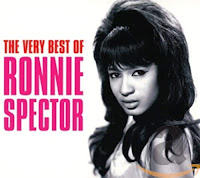
Just eighteen when she started recording with The Ronettes, Veronica Bennett sounded like a kid because she basically still was one, but even when she started having hits with the glorious "Be My Baby" at age twenty , she always retained that youthful timbre. However, she always enriched her high-pitch with a real sense of experience and completely unfiltered emotion.
When she married Phil Spector, the producer of her most unforgettable hits, her career slammed to a halt as he basically kept her a prisoner in her own home. Fortunately, she had the guts to escape her abusive spouse, tell her story, and continue singing in that magical voice pitched right on the borderline of adolescence and adulthood. Whether Ronnie Spector is singing "Be My Baby" or "I Saw Mommy Kissing Santa Claus", her voice always tears my heart out in the best way. Sadly, she died today at the age of 78 after suffering from cancer.
Sunday, November 1, 2020
Review: 'Ready Steady Go!: The Weekend Starts Here'

The most tragic consequence of the shortsightedness of the early television era is that scant footage from the 173 episodes of Ready Steady Go! survives. Only nine complete episodes, one Motown special, and a handful of clips remain. That anyone would have wipe 120-or-so hours of The Beatles, The Supremes, the Stones, The Kinks, The Animals, Martha and the Vandellas, The Zombies, Dusty Springfield, The Ronettes, The Four Tops, Small Faces, or series mascots The Who performing at the height of their powers is criminal, and the pain only stings harder when you read Andy Neill’s new book Ready Steady Go!: The Weekend Starts Here.
Tuesday, March 12, 2019
Farewell, Hal Blaine

The list of songs Blaine helped bring to life is absolutely staggering. He was responsible for scattering majestic fills all over Simon & Garfunkel's "America". He brought orchestral grandeur to Pet Sounds and SMiLE. He funked up The Monkees' "Mary Mary". He pummeled out those rolls that make Neal Hefti's "Batman Theme" go POW! That's him on Elvis's "Bossa Nova Baby", The Association's "Along Comes Mary", The Beach Boys' "Good Vibrations", Paul Revere and the Raiders' "Hungry", Love's "Andmoreagain", The Mamas and Papas' "Go Where You Wanna Go", The Crystals "Da Doo Ron Ron", The Byrds' "Mr. Tambourine Man", The Vogue's "You're the One"... the theme from Three's Company! Phil Spector and Brian Wilson would have been nowhere without Hal Blaine. By his own estimation, he played on some 6,000 tracks.
Blaine was also a big personality, as evidenced in the numerous documentaries to which he contributed his memories, such as The Wrecking Crew! and Beautiful Dreamer: Brian Wilson and the Story of SMiLE. Sadly, the world just lost that beat and that personality because Hal Blaine died at the age of 90 yesterday. You can't say the guy didn't live a full life though.
Blaine was also a big personality, as evidenced in the numerous documentaries to which he contributed his memories, such as The Wrecking Crew! and Beautiful Dreamer: Brian Wilson and the Story of SMiLE. Sadly, the world just lost that beat and that personality because Hal Blaine died at the age of 90 yesterday. You can't say the guy didn't live a full life though.
Wednesday, December 21, 2016
Psychobabble’s 50 Favorite Holiday Season Songs
Oh, I’m quite sure you’ve been bombarded with various
versions of “Jingle Bells”, “Jingle Bell Rock”, and “Jingle Bells, Batman
Smells” since well before Halloween. Don’t let that put you off holiday season
songs, though. The ones you probably haven’t been hearing a dozen times a day will
turn around the “Bah Humbug” attitude that fucking “Christmas Shoes” song
induces. Clean that sleet out of your stocking to make room for these 50
festive and freaky holiday season favorites delivered down your chimney with
Psychobabble’s Christmas seal of approval!

50. “Merry Xmas
Everybody” by Slade
With its glitzy lights, gaudy decorations, and multi-layered
garb, Christmas is the glammest holiday. Wolverhampton glammers Slade
recognized this and cut one of the all-time seasonal classics with an anthem
made for stomping through slush in platform boots.
49. “Christmas
Everyday” by The Miracles
If you’re more inclined to go for a slow, romantic stroll in
fresh, clean snow, “Christmas Everyday” will be more your speed. Smokey’s love
is such a perennial gift that she could turn any day into December 25. That
would be a welcome prospect if every holiday song sounded like this one.
48. “Christmas Is My
Time of Year” by The Christmas Spirit (AKA: The Turtles)
Monday, January 5, 2015
Review: 'Boof! The Complete Pussy Cat: 1966-1969'

France’s Yé-Yé girls were known
for singing—or often speak-singing—coquettish or girlish lollipop pop and
looking cute. Pussy Cat would have none of that. Her stage name was the only
cutesy pie thing about Évelyne
Courtois, a serious rocker who sang and played
guitar in France’s first all-female band, Les Petites Souris, and later drummed
in Les Pussy Cat. Moving outside of that band while taking along its name for
herself, Pussy Cat performed tough-ass, modish rock and pop, appropriately
debuting with a version of “Sha La La La Lee” (“Ce N’Est Pas Une Vie”) that
doesn’t hold back any of Small Faces’ bottom-heavy bash. Her attitudinal
singing has none of Bardot’s disaffected meow. Stand back when her rage boils
over on an electrifying cover of Betty Everett’s “You’re No Good” (“Mais
Pourquoi…”).
Having also cut tracks by and popularized by
The Hollies, The Moody Blues, Paul Revere and the Raiders, The Ballroom, and
Herman’s Hermits (okay…she does have her odd cutesy moment), Pussy Cat eventually
distinguished herself as a good songwriter in her own right in the late sixties,
though by that point she’d shed a lot of her Rock & Roll hellfire and went
in more of an emotive ballad direction. Nevertheless, her rock and pop roots
were still very detectable, as when she stole a bit of The Ronettes’ “Walking
in the Rain” for “Cette Nuit” or did a pretty good version of The Zombies’
“She’s Not There”.
RPM Records’ Boof! The Complete Pussy Cat: 1966-1969 collects all of Pussy Cat’s
sides for her first anthology released outside of France. A couple of
unreleased cuts and four Les Petites Souris sides that reveal Courtois had been
penning her own material as early as 1965 complete a revelatory portrait of one
of France’s most legit rockers.
Friday, December 20, 2013
Track by Track: 'A Christmas Gift for You from Philles Records'
In this ongoing
feature on Psychobabble, I’ve been taking a close look at albums of the
classic, underrated, and flawed variety, and assessing them Track by Track.
“The
biggest thanks goes to you for giving me the opportunity to relate my feelings
of Christmas through the music that I love.”
-Phil
Spector “Silent Night”
Like so many
visionaries, Phil Spector refused to grow up. Perhaps this has been the cause
of so many of his problems—his infantilizing of ex-wife Ronnie Spector, his
daddy issues, and his fatal obsession with playing with guns—but it is also the
source of his art. His favorite toys are the ones found in a recording studio
and his favorite time of the year is Christmas. In 1963, Spector attempted to
capture the essence of the holiday several months before December 25th
in the less than seasonal setting of sunny Los Angeles’ Gold Star Studios. How
would his thunderous Wall-of-Sound work with corny kiddie songs like “Rudolph
the Red-Nosed Reindeer” and “Frosty the Snowman” or the hymn carol “Silent
Night” or the easy-listening standard “Winter Wonderland”? Brilliantly, of
course, though it has taken longer than Spector surely wished for this to
become common knowledge.
Thursday, June 6, 2013
Psychobabble’s 20 Greatest Singles of 1963!
Few artists were thinking in long-playing terms in 1963.
Yes, The Beatles, Beach Boys, Dylan, and Spector all put out A-level albums
that year. Everyone else was focused exclusively on the hit parade, and the
competition was deadly. Along with the aforementioned artists, there were Smokey
and Marvin and Roy continuing their lush, soulful onslaught. The Trashmen and
Kingsmen made known the rumblings in many an American garage. The Stones, The
Supremes, and The Ronettes made their first major statements, and the mighty
Darlene Love belted out from more stunning discs than those that actually bore
her name. Even Elvis managed to hang on while the new guard raged around him to
release one of his last great discs. In a lesser year, any one of the following
45s could have been record of the year. But this is 1963, one of the greatest
notches on the Rock & Soul timeline.

20. “Bossa Nova Baby”
by Elvis Presley
In the year ruled by Motown, Phil Spector, and the Fab Four,
the writing was well on the wall for the man who helped launch the Rock &
Roll era so all those upstarts could have their shots. As recently as 1962,
Elvis’s recorded output was still pretty consistent, if far poppier than the
raw records of his electrifying early days. In 1963, he only managed two truly
memorable sides. First up was the radical mood shifter “(You’re the) Devil in
Disguise,” which John Lennon supposedly likened to a Bing Crosby record. More
interesting was Leiber and Stoller’s frantic “Bossa Nova Baby.” With its freaky
percussion, sudden Mariachi horn solo, and lead guitar work out, “Bossa Nova
Baby” shined even as an unusually restrained Elvis sounded like a guest on his
own record. The following year, he’d release the similar sounding “Viva Las
Vegas,” which would be his last decent single until “Suspicious Minds” five
years later.
19. “My Boyfriend’s
Back” by The Angels
While the King of Rock & Roll no longer seemed capable
of exuding Rock & Roll attitude, a trio of Jersey bad girls were putting
out enough snarl for a dozen Elvises. The Angels sound anything but angelic as
they purr sexy threats to a letch who hung around to bother the girls every
night and say “things that weren’t very nice.” Sorry, sucker, but their beau is
back now and you’re gonna get your ass kicked. Peggy Santaglia’s audible smirk
as she tells her nasty admirer what’s coming to him lends the song a near
sadistic tone, and when she loses control at the end of the record, she sounds
like she’s going to dish out the punishment herself. “My Boyfriend’s Back” was
apparently originally cut as a demo fro The Shirelles, but it’s hard to imagine
those sweethearts working up as much switchblade edge as The Angels do on their
slashing hit version.
18. “Pride and Joy” by Marvin Gaye
Speaking of sweet, was anyone sweeter than Marvin Gaye in
1963? Gorgeous to look at and hear, Marvin was a heart melter, and on “Pride
and Joy,” he lets you know that you ain’t so bad yourself. Backing up Marvin on
this cool cube of finger-snapping soul was a group who’d break out on their own
a couple of months later with a hot hit you’ll find occupying the sixth spot of
this list.
17. “Pain in My Heart”
by Otis Redding
Thursday, November 17, 2011
Review: ‘Phil Spector Presents the Philles Album Collection’
Phil Spector built a pop empire on the otherworldly singles he produced in the early ‘60s. His reputation at 33 1/3 rpms was less solid. The long player didn’t become a vital Rock & Roll conveyance until the British Invasion that ended Spector’s reign. So he didn’t always put a great deal of thought into the way his albums were presented. When he finally resolved to make a masterful L.P., he released it the same day JFK was assassinated. A mourning public didn’t feel much like jingling all the way, and A Christmas Gift for You from Philles Records flopped. Justly, that album has gone on to achieve classic status with its numerous reissues over the decades. Philles Records’ other L.P.s were never afforded that same boost until now.
Phil Spector Presents the Philles Album Collection collects all six non-holiday albums released on Spector’s label on CD for the very first time. This set is fascinating both for its pleasant surprises and its emphasis on just how cavalier Spector was about everything but his single A-sides. There is a large and disappointing amount of overlap between these discs. The Crystals’ first two records, Twist Uptown and He’s a Rebel, are nearly identical. More of the group’s songs are repeated on The Crystals Sing the Greatest Hits Vol. 1. One third of the tracks on that particular L.P. are tossed-off covers of creaky standards, such as “The Wah Watusi” and “The Twist”. And The Crystals aren’t even the artists on those tracks! The Ronettes are!

Yet Spector’s offhand approach to making albums could also be genuinely interesting. Bob B. Soxx & the Blue Jeans’ Zip-A-Dee-Doo-Dah finds him experimenting with greater abandon than he usually dared on his hits. His use of cagey distortion, odd bits of discordance (the guttural, out-of-tune bass on “Baby, I Love You”), and tightly controlled tempos and dynamics make an already eccentric selection of songs—“The White Cliffs of Dover”, “This Land Is Your Land”, the title track, which was certainly Spector’s oddest hit— even odder. Even the Disney-esque cartoon on the front cover is kind of unusual. Zip-A-Dee-Doo-Dah also provides the box set’s most concentrated dose of Darlene Love, whose magnificent solo material is sadly underrepresented here.
Even weirder is Phil’s Flipsides, a bonus compilation of the two-minute instrumental improvisations Spector’s Wall of Sound Orchestra recorded to fill the B-sides of his hit singles and discourage DJs from playing the wrong sides. By design this isn’t the producer’s most essential music, but the combination of wacky Rock & Roll instrumentals and pretty convincing straight jazz is refreshing. Half this disc would sound smashing on a John Waters soundtrack. The other half is great cocktail party mood music. The goofy titles further reveal how little Spector cared about his non-A-sides: “Flip and Nitty”, “Chubby Danny D.”, “Dr. Kaplan’s Office” (named for Spector’s psychiatrist, who was apparently pretty shitty at his job).
Phil Spector Presents the Philles Album Collection will be most appealing to Spector completists, but there is a lot of amazing music here. Granted, those two debut Crystals records are pretty flimsy. The best of their tracks are collected on Sings the Greatest Hits Vol. 1 and the various-artists compilation Philles Records Presents Today’s Hits, which also features a handful of Darlene Love solo sides, including the transcendent “Wait Til’ My Bobby Gets Home”, and The Alley Cats’ fun novelty “Puddin’ N’ Tain”. Best of all is Presenting the Fabulous Ronettes Featuring Veronica, Spector’s first truly great album despite its failure to generate classic status. All of the group’s prime-era hits (“Be My Baby”, “Walking in the Rain”, “Baby, I Love You”, “I Wonder”—Yow!), classic oddities (“You Baby”, “So Young”), and some unexpected surprises (a raucous phony live version of Ray Charles’s “What’d I Say”) converge in a spectacular line up. Along with The Beach Boys, who it so inspired, this is the freshest pop that came out of America during the first year of the British Invasion.
Phil Spector Presents the Philles Album Collection collects all six non-holiday albums released on Spector’s label on CD for the very first time. This set is fascinating both for its pleasant surprises and its emphasis on just how cavalier Spector was about everything but his single A-sides. There is a large and disappointing amount of overlap between these discs. The Crystals’ first two records, Twist Uptown and He’s a Rebel, are nearly identical. More of the group’s songs are repeated on The Crystals Sing the Greatest Hits Vol. 1. One third of the tracks on that particular L.P. are tossed-off covers of creaky standards, such as “The Wah Watusi” and “The Twist”. And The Crystals aren’t even the artists on those tracks! The Ronettes are!

Yet Spector’s offhand approach to making albums could also be genuinely interesting. Bob B. Soxx & the Blue Jeans’ Zip-A-Dee-Doo-Dah finds him experimenting with greater abandon than he usually dared on his hits. His use of cagey distortion, odd bits of discordance (the guttural, out-of-tune bass on “Baby, I Love You”), and tightly controlled tempos and dynamics make an already eccentric selection of songs—“The White Cliffs of Dover”, “This Land Is Your Land”, the title track, which was certainly Spector’s oddest hit— even odder. Even the Disney-esque cartoon on the front cover is kind of unusual. Zip-A-Dee-Doo-Dah also provides the box set’s most concentrated dose of Darlene Love, whose magnificent solo material is sadly underrepresented here.
Even weirder is Phil’s Flipsides, a bonus compilation of the two-minute instrumental improvisations Spector’s Wall of Sound Orchestra recorded to fill the B-sides of his hit singles and discourage DJs from playing the wrong sides. By design this isn’t the producer’s most essential music, but the combination of wacky Rock & Roll instrumentals and pretty convincing straight jazz is refreshing. Half this disc would sound smashing on a John Waters soundtrack. The other half is great cocktail party mood music. The goofy titles further reveal how little Spector cared about his non-A-sides: “Flip and Nitty”, “Chubby Danny D.”, “Dr. Kaplan’s Office” (named for Spector’s psychiatrist, who was apparently pretty shitty at his job).
Phil Spector Presents the Philles Album Collection will be most appealing to Spector completists, but there is a lot of amazing music here. Granted, those two debut Crystals records are pretty flimsy. The best of their tracks are collected on Sings the Greatest Hits Vol. 1 and the various-artists compilation Philles Records Presents Today’s Hits, which also features a handful of Darlene Love solo sides, including the transcendent “Wait Til’ My Bobby Gets Home”, and The Alley Cats’ fun novelty “Puddin’ N’ Tain”. Best of all is Presenting the Fabulous Ronettes Featuring Veronica, Spector’s first truly great album despite its failure to generate classic status. All of the group’s prime-era hits (“Be My Baby”, “Walking in the Rain”, “Baby, I Love You”, “I Wonder”—Yow!), classic oddities (“You Baby”, “So Young”), and some unexpected surprises (a raucous phony live version of Ray Charles’s “What’d I Say”) converge in a spectacular line up. Along with The Beach Boys, who it so inspired, this is the freshest pop that came out of America during the first year of the British Invasion.
Wednesday, September 21, 2011
Review: 'Little Symphonies: A Phil Spector Reader'
 Little Symphonies: A Phil Spector Reader is a humble enough looking book, but like its subject, this little anthology is stuffed with ideas. Editor Kingsley Abbott did a swell job of collecting an eclectic range of articles on the brilliant, bizarre producer. Spector’s life is pock marked with tales terrifying and too-strange-to-be-true, the full breadth of which is certainly too unwieldy to adequately convey in a pocket-sized, 200-page book. So Abbott smartly maintains focus on the man’s music rather than his criminal madness. Of course, Spector’s notorious volatility and unsettling idiosyncrasies creep into much of the material in Abbott’s book.
Following a brief introduction from the editor, things really get underway with a Nik Cohn piece published in a late 1972 issue of Creem. The writer weaves his and Spector’s expectedly strange encounters with a tidy, yet opinionated overview of the producer’s career. Sleazy and beautiful, “Nik Cohn Visits Mr. Spector” is the kind of Rock writing that simply doesn’t exist anymore.
Now that we have our outline of Phil sketched, the details are ready to be painted between the lines. Greg Shaw’s “To Know Him Is to Love Him” (History of Rock- 1982) provides a solid image of Spector’s early career and initial hits. Bob Finnis’s “Phil Spector’s Wall of Sound” (Radio One: Story of Pop- 1973) presents an essential introduction to that echo-swathed monolith of clattering percussion, throbbing basses, chiming acoustic guitars, shimmering strings, and punishing drums. Interviews with producers Phil Chapman and Mark Wirtz probe deeper behind the wall, revealing how, exactly, Spector created his inimitable sound. This stuff is interesting for listeners but downright educational for producers both novice and veteran.
Little Symphonies continues to fascinate with a pair of interviews with Ronnie Spector conducted two decades apart (she is far more comfortable criticizing her ex-husband in the later discussion), several pieces on the mono and stereo variations of Spector’s records, a Richard Williams article and an interview with May Pang that paint portraits of the chaotic studio atmospheres during Spector’s sessions with John Lennon, and an account of the even more chaotic End of the Century sessions written by Dee Dee Ramone, himself.
Varied, entertaining, and endlessly informative with a refreshing minimum of overlapping information, Little Symphonies: A Phil Spector Reader provides a superb selection of Spectornalia essential for all Philophiles.
Thursday, April 14, 2011
Full Line-Up of Ray Davies's Meltdown Announced
Just a quick follow-up on last month's announcement about the Ray Davies-curated, "Ready, Steady, Go"-themed, Meltdown Festival that will be hitting London's Southbank Centre on June 11. Vicki Wickham, original "Ready, Steady, Go" editor and manager of the late Dusty Springfield, lent a hand in selecting the festival's final artist line-up, and our friends across the pond should be most pleased. The already-announced artists --Davies, The Fugs, Arthur Brown, The Alan Price Set, Yo La Tengo, Nick Lowe, Lydia Lunch, and The Legendary Pink Dots--will be joined by Eric Burdon, Sandie Shaw, Nona Hendryx of The Bluebelles and Labelle, Ronnie Spector, and reformed members of Manfred Mann, The Manfreds. My envy continues to grow.
Hendryx and Wickham
Hendryx and Wickham

Subscribe to:
Posts (Atom)