Showing posts with label Andrew Oldham. Show all posts

Saturday, March 9, 2024

Review: Vinyl Reissues of Nico's 'The Marble Index' and 'Desertshore'

Nico had little control over the beginning of her music career, when she sang a couple of pop songs for Andrew Oldham's Immediate label. Another Andy gave her a shotgun marriage to The Velvet Underground, with which she had nearly no creative input despite being the comely commercial face of the band. Nevertheless, her unforgettable turns on the few songs she got to sing were definitely steps in a more natural direction for Nico and her avant garde sensibilities. 

When she got to make her first solo LP a few months after The Velvet Underground & Nico was released, members of the VU (as well as future MOR superstar Jackson Browne, of all people) still provided most of the songs and instrumentation, and she ultimately expressed a distaste for the prettiness of it all. The one song Nico co-wrote on Chelsea Girl, "It was a Pleasure Then", gave a taste of her true ambitions: uncompromisingly dark, borderline queasy music seemingly designed to give her listeners a severe case of the heebie jeebies. Plus, harmonium. Lots and lots of harmonium.


Nico finally got the chance to fully express herself and her harmonium on The Marble Index. Frazier Mohawk, who co-produced the album with former-Velvet John Cale, reportedly said that he made sure it didn't push too far beyond the thirty-minute mark because he was afraid that listeners would start killing themselves if subjected to any more of her ghoulish dissonance. 

Monday, July 17, 2023

Review: The Rolling Stones' 'Metamorphosis' Vinyl Reissue

Looking to take advantage of its vast library of vintage Stones tapes, ABKCO started planning an outtakes compilation in the mid-seventies. When Bill Wyman got wind of the project, he assembled his own list of songs he wanted released as Black Box, but Allen Klein supposedly balked at the lack of lucrative Jagger/Richards originals. He probably also wasn't crazy about Bill's reliance on live recordings and unfinished backing tracks. 

Monday, July 3, 2023

Review: Vinyl Reissues of 4 Rolling Stones LPs

When the Rolling Stones' sixties albums made their first appearance on digitally remastered CDs in the mid-eighties, ABKCO made the fairly controversial decision to issue them in their American iterations rather than the UK originals. At the same time, the label also issued these American versions on vinyl.

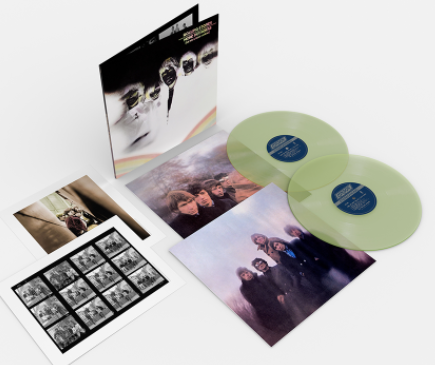
That was 37 years ago. Since then, the UK albums have become the standard in the US during the current vinyl resurgence, although most of the American albums were included on ABKCO's Rolling Stones in Mono box set from 2016. Long story short, ABKCO recently began reissuing each of the American albums in the U.S. as standalone vinyl releases for the first time since 1986. Some of these LPs, such as Aftermath, Between the Buttons, and Flowers, have not been issued in the states on stereo vinyl in any way since 1986. The campaign also includes a few UK records that have never been given standard (i.e.: non-RSD or non-box set) releases in the States before.

Wednesday, May 11, 2022

Review: RSD Edition of The Rolling Stones' 'More Hot Rocks (Big Hits and Fazed Cookies)'

Sure Hot Rocks: 1964 - 1971 had "Satisfaction", "Jumpin' Jack Flash", "Honky Tonk Women", and plenty of other examples of what made The Rolling Stones such a superior blues and R&B-based rock band, but it was missing a really key component of the Stones' story: they could be pretty fucking weird. Aside from a bit of sitar on "Paint It Black", some dissonant guitar effects on "Mother's Little Helper", Brian Jones's pastoral recorder on "Ruby Tuesday", and that choir on "You Can't Always Get What You Want", Hot Rocks generally presented the Stones as a more conventional band than they'd been from 1964 to 1971 (more consistently conventional days were ahead of them after '71, but that's another, less interesting story). Where was the psychedelia? Where were the fey Elizabethan ballads? Where was whatever the hell "I'm Free" is? 

Thursday, June 2, 2016

366 Days at the Drive-In: Day 246


The Date: June 2
The Movie: Charlie Is My Darling (1966)
What Is It?: The Stones were too uncontainable to put in a Hard Day’s Night style scripted romp, so Andrew Oldham made them the somewhat unwilling subjects of a documentary instead. Mick and Keith are the hammy ones, Bill the noncommittal one, Brian the fey and articulate one, and Charlie the inarticulate, possibly self-loathing one. He’s also my darling.
Why Today?: On this day in 1941, Charlie Watts is born.

Sunday, November 1, 2015

Review: 'The Beach Boys: America’s Band'


Active on-and-off from 1961 to the present, The Beach Boys’ career packs a lot of history, so it would be naïve to expect a 250-page book dominated by large photos to say everything that needs to be said about all those great songs, strange personalities, terrible tragedies, and tedious lawsuits. Nevertheless, Johnny Morgan does a pretty admirable job in his new coffee-table centerpiece The Beach Boys: America’s Band. The basic narrative runs through the book occasionally supported by half-page profiles of albums and singles. While coffee table books usually don’t present a point of view, Morgan asserts his personality with lively writing and a critical viewpoint of the band’s music and the often questionable ways certain members (Mike Love) have chosen to represent a band that has been profoundly splintered for more than half of its five-decade history. There are no gaping omissions here, though there are no revelations either. Morgan sticks to the essential tale told in many other books, which he often quotes throughout.

Although his book boasts no firsthand interviews, the author has clearly read a lot about his book’s topic, which makes the occasional major error rather jarring. He marks “Kokomo” as the band’s third number one hit (it was their fourth) and confuses the content of Revolver for that of Rubber Soul, which really affects his discussion of Pet Sounds. More forgivable is his assumption that Between the Buttons “must have sounded like a nightmare” to Brian, though if Morgan was aware that Rolling Stones manager Andrew Oldham played the LP for Brian Wilson, he should have also read that Brian really dug the record and ranked its only nightmarish track, “My Obsession”, as one of his favorite Stones songs.

Morgan’s critiques can be odd too, as when he calls the extremely simple and graspable metaphors of “Til I Die” “inane nonsense.” Kudos to the author for taking The Monkees as seriously as he does, but reviewing Smiley Smile as if it’s some sort of direct response to Headquarters is an inadequate and misguided approach. Of course, most serious Beach Boys fans will crack America’s Band not for history and assessments but for its lovely abundance of photos, and on that account, it’s definitely a looker.

Monday, November 10, 2014

Review: Glyn Johns's 'Sound Man"


Glyn Johns isn’t a household name for anyone but the truest Rock & Roll obsessives. His c.v., however, will blow the most clueless cat’s mind. He has produced, mixed, and engineered recordings for The Beatles, The Kinks, The Rolling Stones, The Who, Led Zeppelin, Marianne Faithfull, Small Faces, Procol Harum, The Move, Traffic, Belly, Del Shannon, The Clash, and too many other artists to mention. While doing his most memorable work during the hedonistic sixties and seventies, he kept his head the whole time, preferring to fraternize with the era’s soberest players –Ian Stuart and Bill Wyman, for example—while putting in his hours with wild children like Keith Moon, John Bonham, and Keith Richards. Johns may be the only guy in the universe who could come away from a day’s work with Marianne Faithfull madly in love with the studio instead of her.

That clear-headedness is very evident in Johns’s new autobiography Sound Man. While his straightness may not always make for the most rocking and rolling reading, he has rubbed shoulders with so many greats that his behind-the-board perspective brings new angles to some old stories. Although he supports the theory that Mick and Keith were always really the producers behind their greatest hits, he admits to being impressed with Andrew Loog Oldham’s work on his first Rolling Stones session, though he doesn’t get too specific about what impressed him. Gear heads expecting a lot of production tips from one of the industry’s best might be disappointed. Johns aims for a broader audience and doesn’t skip over discussions of his most legendary gigs, such as capturing The Beatles during the tension-fraught Get Back sessions or working with Zeppelin on their debut. His minor recollections make these major stories worth retelling, as when he mentions that Paul McCartney wanted him more involved in the process than he was expecting or hilariously recalls showing off Led Zeppelin’s first recordings to Mick Jagger and George Harrison only to be met with confusion and disgust.

Sometimes Johns’s stories do elevate to the mythic level we expect from a Rock & Roll memoire. He reveals Bob Dylan’s plan to make a record with The Beatles and The Stones (!) and chillingly recounts how Small Faces’ manager Don Arden hired thugs to threaten him at gunpoint. Just as often he brings the myths down to earth, as when he describes The Rolling Stones’ utterly tedious recording process. Johns certainly pulls no punches. Pye Records’ A&R man Toy Hatch is “an unpleasant little shit with a massive ego.” The Stones’ “Sing This All Together” is “drivel.” Phil Spector’s version of Let It Be is “the most syrupy load of bullshit” he “ever heard.” So I guess what Sound Man lacks in Rock & Roll wildness it makes up for with a bit of Rock & Roll attitude.


Friday, January 20, 2012

Through the Past Darkly with ‘Between the Buttons’


Tap your foot and rhyme, trip back 45 years time… Swinging London in full swing… floppy hats and foppish brooches… skinny drain pipes and big round sunglasses under sunless skies… paisley, pinstripes, pop art… acid and nightly clubbing with Rock royalty… The Beatles, The Who, The Kinks… the artists’ art: Rubber Soul and Revolver, My Generation and A Quick One, “Sunny Afternoon” and “Over, Under, Sideways Down”… visitors from across the Atlantic: Bob and Brian bringing Blonde on Blonde and Pet Sounds back home… Chuck and Muddy stacked in the attic… out with Chrissie Shrimpton like yesterday’s papers; in with Marianne and Anita… all these ingredients in the soup of late ’66… when The Rolling Stones consumed their peers and times, the styles, the sex, the drugs, the lifestyle, the retro vaudeville and prog psychedelia, spat them out on a vinyl time capsule called Between the Buttons… see it more clearer…

…Between the Buttons starts as a laugh… a spate of writing in late 1966… Mick goes solo for the first time, discarding Chrissie with utmost cruelty on “Yesterday’s Papers”… Keith composes “Connection” without connecting with his mate, unknowingly foretelling

Tuesday, January 11, 2011

Psychobabble Loves P.P.

Finish snickering at those initials then get hip to the reality that P.P. Arnold is the greatest soul singer you may have never heard. Pat Arnold was opening for The Rolling Stones as an Ikette in the Ike and Tina Turner Review when she struck up a friendship with Mick Jagger. Jealous Ike gave Pat her pink slip, but The Stones’ savvy manager, Andrew “Loog” Oldham, quickly snatched her up… and away from Stones bassist Bill Wyman, who wanted her to sing backup for his protégés Moon’s Train. Oldham gave Pat her new moniker, which was intended to suggest bluesiness, and signed her up to his independent label, Immediate Records.


As P.P. Arnold, she released “Everything’s Gonna Be Alright” (co-written by Oldham) in early 1967. A smooth bubblegum soul production that was equal parts Phil Spector and Motown, “Everything’s Gonna Be Alright” is a standout because of P.P.’s unpolished pipes, which rasp away over the orchestral backing. But the record’s real gem—and the real indicator of the Arnold agenda— was buried on the flip. Written by David Skinner and Andrew Rose of Immediate’s pasty folk duo Twice as Much, “Life Is Nothing” is a moody, acoustic ballad with tasteful strings, more reminiscent of The Beatles than anything Aretha Franklin would have cut. That’s what really set P.P. Arnold apart from her soul peers: she essentially transformed British pop numbers into achingly soulful work outs every time she layered on that cracked rasp. What P.P. Arnold was doing was not dissimilar from the records of her label mates, Small Faces, so when she eventually started recording with them it was a match made in Northern Soul Nirvana. But first she’d work her magic on her signature song: Cat Stevens oft-recorded “The First Cut Is the Deepest”. That she was able to a transform a song that is, let’s face it, pretty corny into a work of flaming rage and hurt that could peel the paint off Rod Stewart’s little red wagon is another of P.P. Arnold’s great gifts. She did the same thing with the even cornier “Angel of the Morning”, a song that more famously got the sap treatment by the likes of Juice Newton, Merilee Rush, and Olivia Newton John. Careening from P.P. Arnold’s throat, “Angel of the Morning” is a masterpiece of mighty assuredness (John Paul Jones’s exquisite baroque-soul arrangement doesn’t hurt either).

P.P. Arnold’s greatest record was written by Small Faces Steve Marriott and Ronnie Lane and saddled with the laughably dated title “(If You Think You’re) Groovy”. With Small Faces as her backing, Arnold shreds her vocal cords beyond the call of duty as she lets a cat know that he isn’t nearly as groovy as he thinks he is. The chorus punches in with a Kenny Jones drum fill that detonates like an A-bomb, then Arnold takes over to rant and rave her way to transcendence. Fucking unbelievable.


The first of P.P. Arnold’s LPs, The First Lady of Immediate, is her greatest, a flawless soul pop album bolstered by her first few singles and some exceptional additional material, some of which was composed by the singer. With the smoldering “Though It Hurts Me Badly”, “Treat Me Like a Lady”, and “Am I Still Dreaming”—a track that would have inspired Spiro Agnew to leap off his ass and do the pony—she delivered the record’s purest soul numbers. Arnold’s second album, the more conceptually produced Kafunta, is great as well, although it is slightly lessened by an abundance of overly familiar covers. But though her versions of Jagger and Richards’s “As Tears Go By” and The Beatles’ “Eleanor Rigby” and “Yesterday” are inessential, her reading of “God Only Knows” is stunning, and even more so considering that the original features what might be the most beautiful vocal ever captured in a pop recording; the kind of recording that should make all others irrelevant.

After P.P. Arnold cut her final sides for Immediate in 1969, she appeared in stage musicals, acted in the nighttime soaps "Knot's Landing" and "St. Elsewhere" in the '80s, and performed session work for such artists as Nick Drake, Roger Waters, Ocean Colour Scene, and Oasis.

All the amazing recordings P.P. Arnold made during her brief two-year career with Immediate Records are compiled on First Cut, which you should pick up immediately.
All written content of Psychobabble200.blogspot.com is the property of Mike Segretto and may not be reprinted or reposted without permission.