Saturday, April 16, 2022

Review: 'Faith Horror: Cinematic Visions of Satanism, Paganism and Witchcraft, 1966-1978'

As fun, transgressive, and quick-to-offend as horror can be, it is often quite conservative at heart. Just think of the means Van Helsing employs to give Dracula the willies: the crucifix. Christianity is often used as a simplistic symbol of good in horror--the supernatural cure for supernatural evil. 

However, religion's role can be more complex, or at least less direct, than this, as LMK Sheppard argues in her new book Faith Horror: Cinematic Visions of Satanism, Paganism and Witchcraft, 1966-1978. While the surface conflict of many horror movies appears to be a matter of good/christianity vs. evil/satanism-paganism-witchcraft, the core conflict may actually be one of faith vs. commerce (Rosemary's Baby) or predestination vs. free will (The Omen). In the case of The Wicker Man, that conflict might not actually be between the film's two obvious opponents-- christian cop Sgt. Howie and the pagans of Summerisle--but between the faith of both of those adversaries vs. the secular reality that leaves all of them clearly screwed at the end of the picture.

I usually avoid academic studies like Faith Horror because I'm no longer in college and I often find this kind of analysis to be merely theoretical--it rarely deepens my appreciation for the topic discussed or convinces me that the author's theory is truly essential for a meaningful understanding of that topic. While this was the case with several of the chapters in Faith Horror, chapters such as the ones on Rosemary's Baby and The Wicker Man provided enough snacks for thought that I found the overall discussion worthwhile. A quotation from a New York Times article by Leonard Wolf that Sheppard quotes in her book's introduction sums up why I, an absolutely devoted non-believer, am so fascinated with all of horror's supernatural hogwash better than anything I'd ever read. The book also contains the best typo I've ever read, one that makes Rowan Morrison, the missing girl of The Wicker Man, seem like some sort of unholy hybrid beast born in the Joke Wall from Laugh-In.

Wednesday, April 13, 2022

Review: 'Welcome to Elm Street: Inside the Film and Television Nightmares'

After the release of Halloween in 1978, the slasher film started shaping up to be the most pervasive, formulaic, and depressingly cynical horror subgenre of the eighties. Teens flocked to see their classmates get killed in a variety of graphic, grindingly predictable ways by personality-devoid murder machines like Michael Myers and Jason Vorhees. 

Wes Craven jolted the subgenre forward when he unleashed Freddy Krueger on them in 1984. Here was a slasher with an actual personality, a wit of sorts, and a completely original method of destruction. By attacking his victims in their dreams, Freddy allowed Craven and the various filmmakers who took on the various Nightmare on Elm Street sequels to unleash their imaginations, setting their kills in environments a lot more interesting than a suburban neighborhood or summer camp. Freddy's one-liners were always pretty lame, but his glibness somehow made the violence more disturbing and more palatable. All that personality also helped transform Krueger--a serial child killer (though not a pedophile, despite accusations from both critics and fans)--into a truly weird marketable character. Not only were there Freddy films and a Freddy TV series, but there were also Freddy toys, games, and comics. The declaration of September 13 as "Freddy Krueger Day" in L.A. in 1991 may have been taking things a little too far, but the moral outcry against it was even sillier.

Wayne Byrne takes a deep dive into most of this stuff in his immensely fun new book Welcome to Elm Street: Inside the Film and Television Nightmares. Byrne doesn't spend much time with the merch, but he does afford the films and the short-lived TV show Freddy's Nightmares more attention than probably anyone thought these things deserved when they were ubiquitous in the eighties and nineties. He provides some light analysis and critique, but the bulk of the book is devoted to the remembrances of the directors, special effects artists, and actors who made the nightmares. With a little pruning and restructuring, the book could have been a straight-up oral history.

Obviously, the late Craven does not contribute, but most of the directors of the sequels offer their memories. Freddy himself, Robert Englund, is the biggest name, and he clearly fancies himself a bit of a Freddy scholar. Some of his theories overreach a bit, but it's still great to get the perspective of the guy who clearly knows the character better than anyone, and the historical and making-of details from all participants are gold. 

Sunday, April 10, 2022

Review: 50th Anniversary Edition of Marvin Gaye's "What's Going On"

In 1971, Marvin Gaye gave Berry Gordy a serious case of the cold sweats when the artist presented his latest concoction for release on Gordy's Motown. Until that time, the label had been known for light-hearted odes to love delivered in a set style designed for transistor radios and discoteque floors. "What's Going On" was something else: trippy, political, and not particularly hopeful. The album constructed around Obie Benson's composition--which was too much for Benson's own Four Tops... and Joan Baez, of all people--further exploded Motown tradition by doing away with individual tracks for a seamless suite of songs as invested in current affairs and relentlessly searching as its title track. 

Friday, March 18, 2022

Review: 'Batman: The Ultimate Guide (New Edition)'

With yet another Batman movie being the most hyped new release, it is a fine time to get more new Bat-product onto shelves. Although Batman: The Ultimate Guide is apparently not 100% new since it is an update of a book originally published in 2001 (though, it must be pretty different since it was written by a totally different author and details a lot of Bat business that went down in the past twenty years), and it is only an ultimate guide if we forget that Batman has had a very active life off of comics pages (which would require some sort of Hugo Strange brain-eraser thingy), it is still a neat, if brief, trip through 80-something years of Batmania. 

Author Matthew K. Manning had a potentially difficult task in distilling Batman's many, many, many iterations in the comics down to a history that could fit on 200 image-crowded pages. He included profiles of the Batmobile, the Batcostume, the Batcave, the Justice League, and Gotham City,  as well as various friends, foes, and love interests. There are a few profiles of key comic issues with synopses and illustrative panels. There's a spread on that time Green Lantern turned Batman into a zombie. I even learned a few things (I had no idea False-Face appeared in the comics in 1958 and was not an invention of the sixties TV-series), but the book's main draw is it's colorful, spectacular, and varied rogue's gallery of images.

Saturday, March 5, 2022

Review: 'Into Every Generation A Slayer Is Born: How Buffy Staked Our Hearts'

In the "Pre-Prologue" of his new book, Into Every Generation A Slayer Is Born: How Buffy Staked Our Hearts, Evan Ross Katz states that he "set out to write a book about Buffy the Vampire Slayer, the historic and groundbreaking television series that altered and then reshaped the television landscape..." before clarifying "This will not be that book. It will contain remnants of the book I set out to write" but, he goes on to explain, the context has changed. 

Any fan of the show knows exactly what he means. Actors Charisma Carpenter, Amber Benson, and Michelle Trachtenberg have all gone on record about how formerly-revered series creator Joss Whedon made them feel unsafe, manipulated them, lied to them, or insulted them (or in Carpenter's case, all of the above). Others from the show's cast and crew have since come out to corroborate these stories or offer support to the women who went through all that crap.

Whereas Katz apparently began his book in a world where Buffy the Vampire Slayer was generally considered to be a groundbreaking piece of television about a feminist superhero who slays vamps with her Mr. Pointy and its creator was considered by many to be nothing short of a genius, the landscape then shifted to one in which Whedon was outed as a serial-jerk (who still hasn't reckoned with or apologized for any of his alleged transgressions) and the show itself has been widely reevaluated in ways that have seen its feminist stock plunge severely.

Friday, March 4, 2022

Review: TCM's Ultimate Movie Trivia Challenge Game

My regular readers know that I mostly review books, DVDs, and records aimed at groovy ghouls, retro rockers, and kooky cultists here on Psychobabble, but I'm branching out ever so slightly with this post to write my first game review. Turner Classic Movie's Ultimate Movie Trivia Challenge doesn't stretch too far from the usual Psychobabble subject of retro-pop culture, but it did force me to alter my usual solitary review approach. So I wrangled my wife, Elise Nussbaum, for assistance. I didn't simply choose her because she is conveniently located or basically the only other adult human I talk to (although both of those things are true); she was also the perfect candidate because she is a former three-day Jeopardy champion, so I knew she would go easy on neither TCM's Ultimate Movie Trivia Challenge nor me. 

Game play is refreshingly simple in an age of games with unnecessarily convoluted rules. One player draws a card with four questions. The other player randomly selects a number from one to four, and the question-asker asks the corresponding question. Each correctly answered question earns a player one point, and on it goes until one player accumulates a set number of points. The rules suggest 10, 12, or 15.

Saturday, February 26, 2022

Review: '1968-1969' by Please

At the same time much of the rock world was descending from the cosmos toward more rustic planes in 1968/'69, drummer/singer/writer Peter Dunton was floating off to Neptune with his band Please. While the heavy drumming and riffing and overpowering organ recalled contemporary bands like Vanilla Fudge and Iron Butterfly, Dunton's weedy, reedy vocals were straight out of some circa-'67 fairyland and the songs were tight without any of those other groups' meandering jamming. 

Please could mix up the tempos, settling into a folky strum on "Watching" or powering through the speedy tempo of the genuinely exciting "Breakthrough", but the mood always remained murky, dreamy, and druggy. Perhaps the recording quality of the various demos Please left behind is as responsible for that mood as the songs and performances themselves. Pulled from tapes and acetates, Please's recordings are decidedly lo-fi, though many still manage to be quite dynamic with a rather big bottom. 

Originally released by Acme in 1998, this selection of sides titled 1968/1969 is now making it back to vinyl via Guerssen Records. Presumably not much is known about Please, since Guerssen's release is atypically light on historical liner notes, but there a few notes on the back of the cover and there's a lyric insert inside it. More importantly, the vinyl is flat, well-centered, and very quiet. Any noise is down to primitive sources, but even that is pretty minimal. I received the black vinyl version for review, but there's also a white vinyl one in a limited edition of 110 units.

Monday, February 21, 2022

Review: 'Loner at the Ball: The Life of Andy Warhol'

Andy Warhol was the most famous artist of his generation, but he was often criticized as an empty vessel replicating vacuous images of soup cans and celebrities. He was the best-known artist, but he was also seemingly unknowable. He was instantly recognizable because of his iconic look (wan demeanor, white skin, white wig) that seemed to be as much about personal branding as it was about personal style, but he was stoic, and when he did become relatively chatty during interviews, he tended to spin yarns or sell others’ stories as his own just as he sold the Campbell’s company’s designs as his. 

Thursday, February 3, 2022

Review: Wings' 'Wild Life', Half-Speed Mastered Vinyl Reissue

Paul McCartney couldn't catch a break after The Beatles broke up. While he attempted to reset his perfectionist aesthetic with McCartney, a rough collection of finished and inchoate songs on which he played all the instruments, critics ran him down for being sloppy, lazy, cute, and glib. Okay, they had a point, but when they continued to pile on when he allowed his inner perfectionist to reemerge, and he made the delightful RAM, so full of lively performances and well-crafted pop nuggets, it became clear that they had it in for Paul McCartney. So either as a means to fade into a combo to prove he wasn't the control freak his former bandmates painted him as or because he genuinely missed the camaraderie and collaboration of band-work, McCartney decided to put his name off to the side and form a new group. 

Wednesday, January 12, 2022

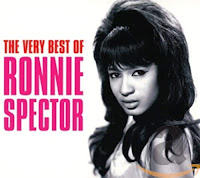
Farewell, Ronnie Spector

Rock and roll was always aimed at a young audience, and from the genre's very beginning, rock singers' were voicing the concerns and feelings of their teenaged audience. Artists like Chuck Berry and Buddy Holly may have been experts at writing lyrics that reflected the antiestablishment angst or romantic yearnings of their young audience, but they didn't really sound like kids themselves. Neither did Elvis or Little Richard or Fats Domino or Darlene Love. Ronnie Spector, however, did. 

Just eighteen when she started recording with The Ronettes, Veronica Bennett sounded like a kid because she basically still was one, but even when she started having hits with the glorious "Be My Baby" at age twenty , she always retained that youthful timbre. However, she always enriched her high-pitch with a real sense of experience and completely unfiltered emotion. 

When she married  Phil Spector, the producer of her most unforgettable hits, her career slammed to a halt as he basically kept her a prisoner in her own home. Fortunately, she had the guts to escape her abusive spouse, tell her story, and continue singing in that magical voice pitched right on the borderline of adolescence and adulthood. Whether Ronnie Spector is singing "Be My Baby" or "I Saw Mommy Kissing Santa Claus", her voice always tears my heart out in the best way. Sadly, she died today at the age of 78 after suffering from cancer.

All written content of Psychobabble200.blogspot.com is the property of Mike Segretto and may not be reprinted or reposted without permission.